
The Ultimate Guide to Best Meeting Notes: 10 Proven Strategies That Transform Team Productivity in 2025
Discover the most effective meeting notes strategies that top-performing teams use to boost productivity, ensure accountability, and drive measurable results in today’s fast-paced business environment.
Introduction
Featured Partner
Quiknote: A mobile app that generates easy to read transcriptions from meetings and lectures, pro…
a mobile app that generates easy to read transcriptions from meetings and lectures, providing a summary for them to skim the content quickly.
- Users can also share the notes and chat with them to ask questions.
- Onboard quickly with guided setup and white-glove support.
Request a walkthrough in minutes.
Effective meeting notes are the backbone of successful business communication, yet most professionals struggle to capture and organize information in ways that drive real results. Whether you’re leading a team meeting, participating in client calls, or attending strategic planning sessions, the quality of your meeting notes directly impacts follow-through, accountability, and overall team productivity.
The challenge isn’t just taking notes—it’s creating a system that transforms scattered thoughts and discussions into actionable insights. Research shows that teams with structured note-taking processes are 40% more likely to achieve their meeting objectives and maintain clear accountability across projects.
In this comprehensive guide, you’ll discover the best meeting notes strategies used by high-performing teams worldwide. From proven templates and digital tools to advanced techniques for different meeting types, you’ll learn how to revolutionize your approach to meeting documentation. We’ll explore everything from real-time collaboration methods to post-meeting optimization strategies that ensure your notes become powerful drivers of business success.
Essential Components of Effective Meeting Notes
Creating comprehensive meeting documentation requires a systematic approach that captures all critical information while maintaining clarity and accessibility. The foundation of the best meeting notes lies in understanding what elements must be included and how to structure them for maximum impact. This section explores the core components that transform basic meeting minutes into powerful business tools that drive accountability and results.
Meeting Header Information
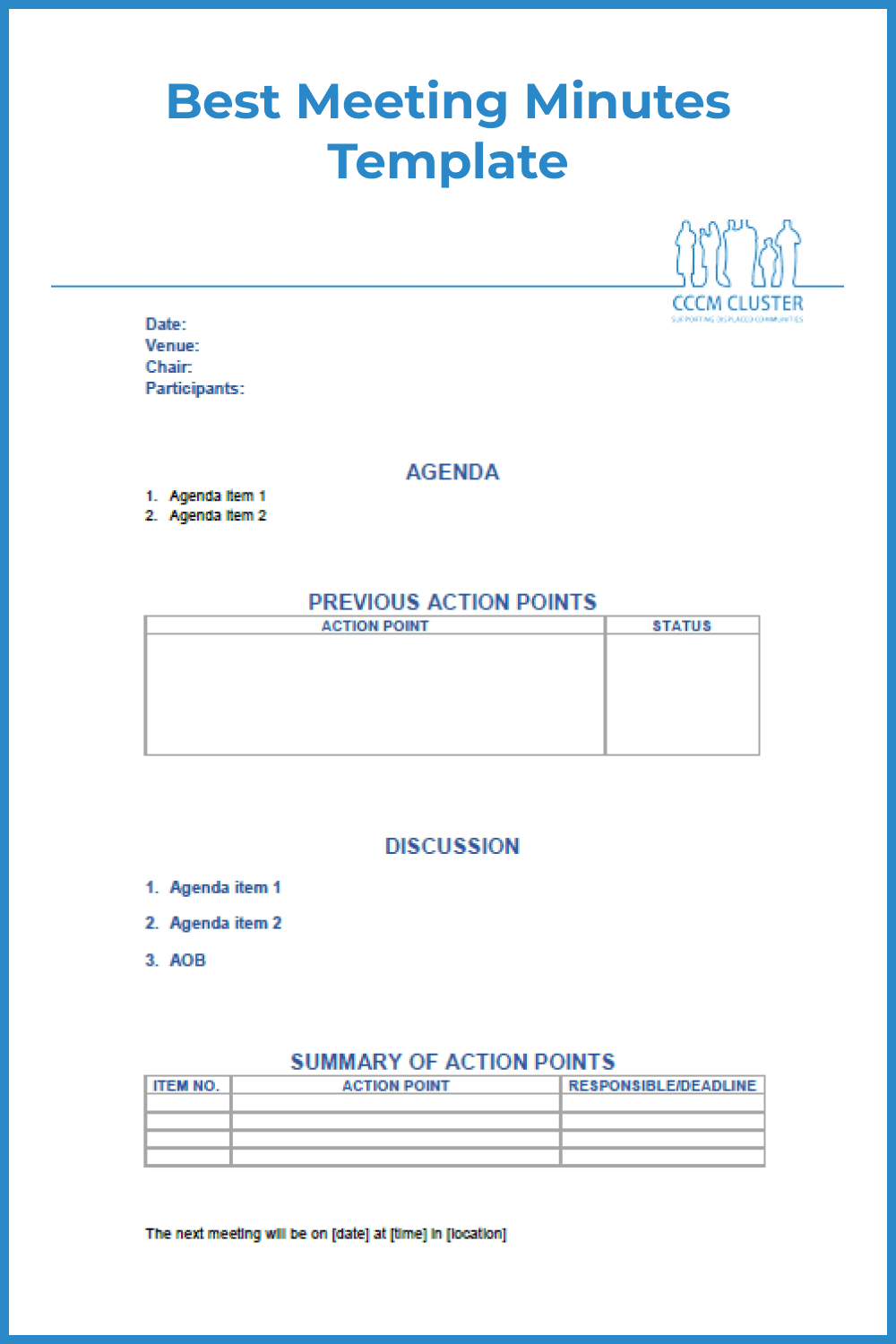
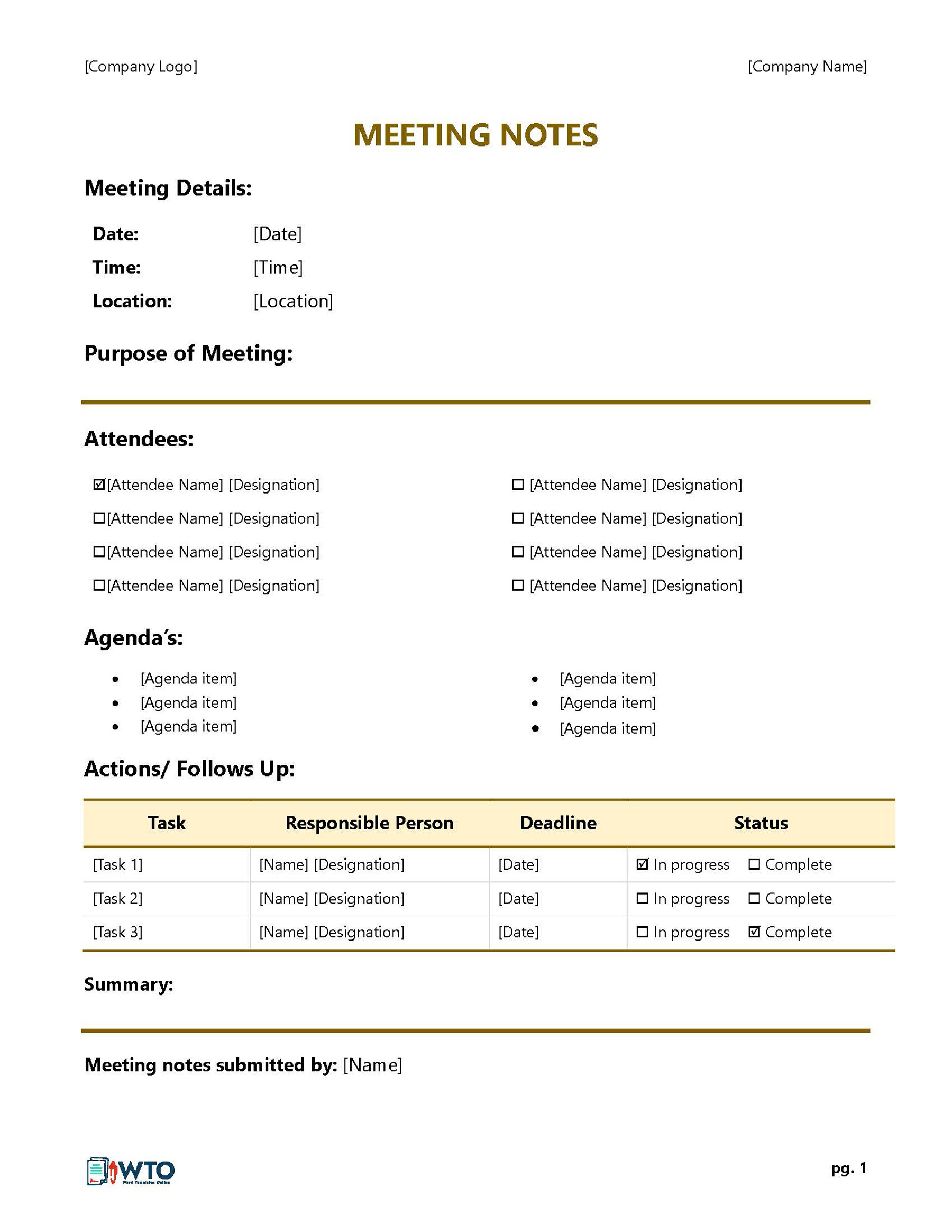
Every professional meeting note begins with comprehensive header information that provides essential context and enables easy retrieval. This foundational element should include the meeting title, date, time, duration, location (physical or virtual), and a complete attendee list with roles and contact information. The agenda items should be clearly outlined, along with the meeting’s primary objectives and expected outcomes. Studies show that meetings with properly documented headers are 65% more likely to have successful follow-up actions completed on time.
Professional note-takers also include reference numbers or project codes that link the meeting to broader initiatives. This systematic approach ensures that anyone reviewing the notes later can immediately understand the context and importance of the discussion, making the documentation valuable for both immediate follow-up and future reference.
Action Items and Decision Tracking
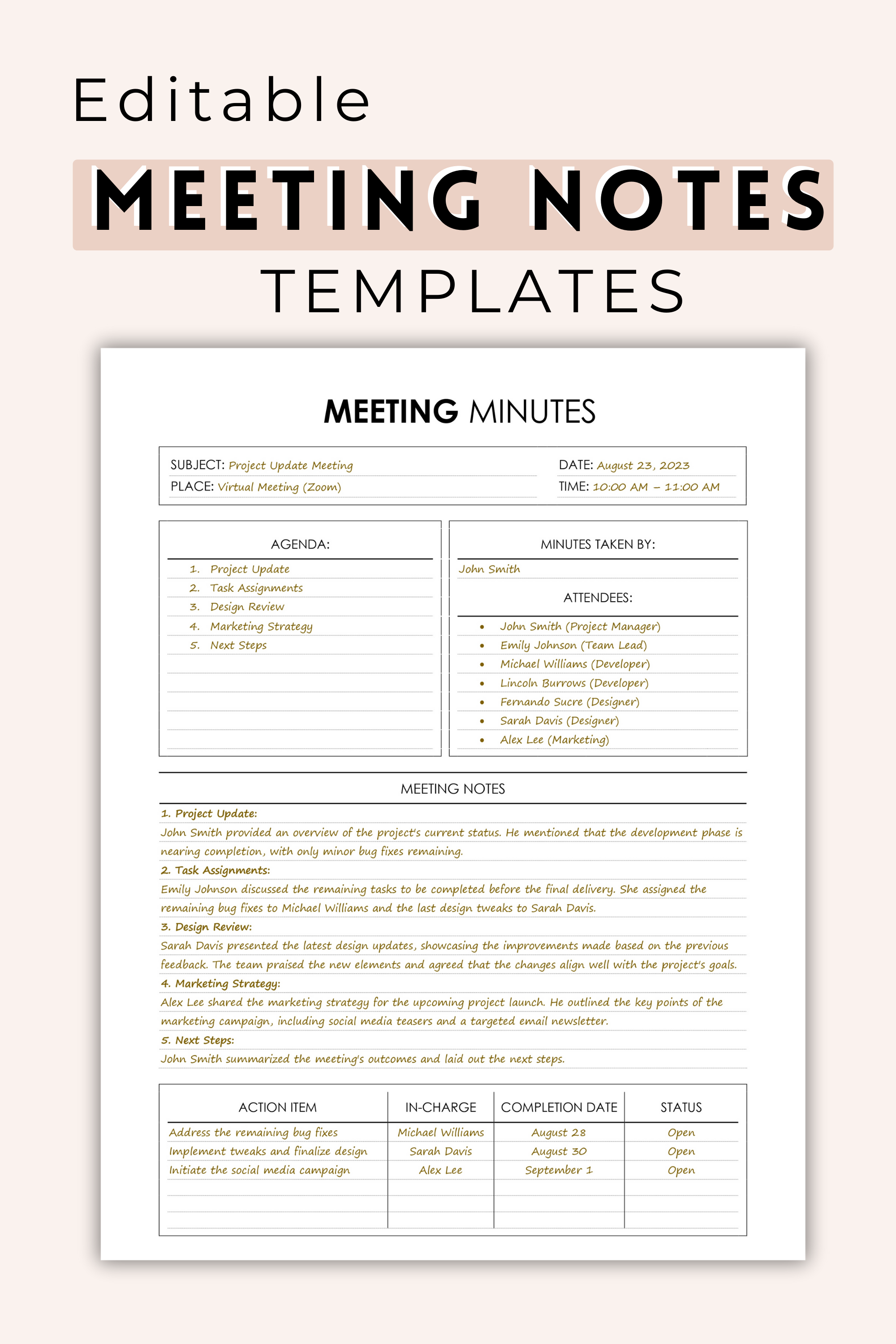
The heart of effective meeting notes lies in clearly documented action items and decisions that drive measurable outcomes. Each action item should specify what needs to be done, who is responsible, and when it should be completed. Use consistent formatting such as “ACTION: [Task description] – [Assigned person] – [Due date]” to ensure clarity and easy scanning. Research indicates that teams using structured action item formats see 58% better completion rates compared to unstructured approaches.
Decisions made during the meeting require equal attention, with clear documentation of what was decided, the rationale behind the decision, and any conditions or dependencies. This prevents future confusion and provides a clear audit trail for important business choices. Include voting results, consensus levels, and any dissenting opinions that might impact implementation.
Key Discussion Points and Context
Beyond actions and decisions, comprehensive meeting notes capture the essence of discussions that led to outcomes. This includes different perspectives shared, concerns raised, alternatives considered, and the reasoning behind final choices. However, avoid transcribing every word—instead, focus on summarizing key points that provide valuable context for future reference. Teams that document discussion context report 43% fewer misunderstandings in follow-up communications.
Include relevant data, statistics, or specific examples mentioned during the meeting. These details often become crucial when implementing decisions or revisiting topics in future meetings. The goal is to create a narrative that someone who wasn’t present could follow and understand, while maintaining professional brevity.
Follow-Up and Next Steps Planning
Effective meeting notes conclude with clear next steps and follow-up schedules that ensure momentum continues beyond the meeting room. Document when the next meeting is scheduled, what preparation is required from participants, and any interim checkpoints or deadlines. Include contact information for key stakeholders and reference materials that support ongoing work.
This section should also capture any parking lot items—topics that were raised but not fully addressed during the meeting. These items need clear ownership and timelines for resolution to prevent them from falling through the cracks and impacting project progress.
Digital Tools and Templates for Superior Note-Taking
Modern meeting documentation has evolved far beyond traditional pen-and-paper methods, embracing digital solutions that enhance collaboration, accessibility, and integration with business workflows. The right combination of tools and templates can increase note-taking efficiency by up to 70% while improving information retention and follow-through. This section examines the most effective digital platforms and structured approaches that transform meeting notes from passive documentation into active productivity drivers.
Cloud-Based Collaborative Platforms
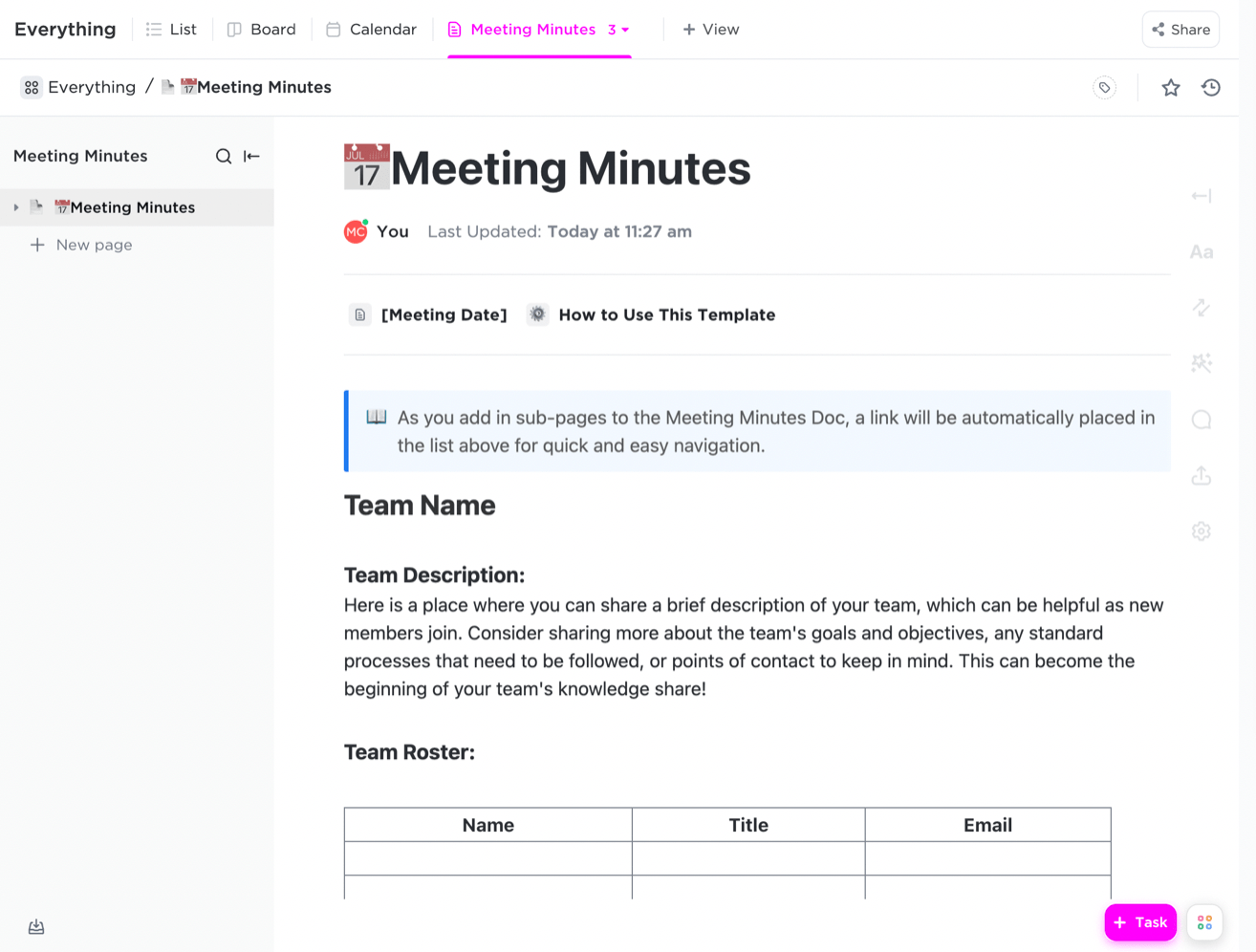
Real-time collaborative platforms revolutionize meeting documentation by enabling multiple participants to contribute simultaneously while maintaining version control and accessibility. Tools like Google Docs, Microsoft 365, and Notion allow teams to create shared meeting notes that update instantly across all devices. These platforms reduce the burden on single note-takers while ensuring comprehensive coverage of discussions. Companies using collaborative note-taking report 52% improvement in meeting follow-through and accountability.
These tools offer advanced features including comment systems, suggestion modes, and integration with calendar applications, making it easy to link notes to specific meetings and track changes over time. The ability to search across all meeting notes creates a powerful knowledge base that becomes more valuable with each documented session, enabling teams to reference past decisions and track project evolution effectively.
Specialized Meeting Management Software
Dedicated meeting management platforms take documentation to the next level by providing structured workflows, automated tracking, and seamless integration with project management systems. Solutions like Fellow, Hugo, and Clockify offer pre-built templates, automated action item tracking, and integration with popular tools like Slack, Asana, and Jira. These platforms can reduce meeting preparation time by 35% while increasing action item completion rates by up to 68%.
The automation features in these tools include agenda distribution, time tracking, automated follow-up reminders, and progress reporting. Many platforms also provide analytics on meeting effectiveness, helping teams optimize their communication processes and identify patterns that impact productivity.
AI-Powered Transcription and Analysis
Artificial intelligence has revolutionized meeting documentation through automated transcription services that convert spoken words into searchable text with 95%+ accuracy. Tools like Otter.ai, Rev, and built-in features in platforms like Zoom and Microsoft Teams can generate initial transcripts that serve as the foundation for refined meeting notes. These AI tools reduce manual note-taking time by 80% while ensuring no critical information is missed during fast-paced discussions.
Advanced AI features go beyond simple transcription to identify speakers, highlight key topics, extract action items, and even suggest follow-up tasks based on conversation patterns. Some platforms can analyze sentiment, track speaking time distribution, and provide insights into meeting dynamics that help improve future sessions.
Mobile and Offline Solutions
Mobile-optimized note-taking apps ensure that meeting documentation continues seamlessly across different environments and connectivity conditions. Applications like Evernote, OneNote, and Bear offer robust offline capabilities, voice recording features, and synchronization across devices. These tools are particularly valuable for field meetings, client visits, or situations where internet connectivity is unreliable.
The best mobile solutions include features like handwriting recognition, photo integration, and quick capture modes that allow users to document ideas and decisions instantly. When connectivity is restored, these apps automatically sync with cloud-based systems, ensuring that all meeting information is preserved and accessible to team members.
Proven Templates for Different Meeting Types
Different meeting formats require specialized approaches to documentation that align with their unique objectives and outcomes. Using targeted templates increases note-taking effectiveness by 45% and ensures that critical information specific to each meeting type is consistently captured. This section provides battle-tested templates and strategies for the most common business meeting scenarios, helping you adapt your documentation approach to maximize value and impact.
Strategic Planning and Leadership Meetings
Strategic meetings demand comprehensive documentation that captures high-level decisions, long-term planning discussions, and complex resource allocation choices. These sessions require templates with dedicated sections for vision statements, strategic objectives, competitive analysis, and timeline milestones. The best meeting notes for strategic planning include SWOT analysis results, market opportunity assessments, and financial implications of major decisions. Companies using structured strategic meeting templates report 62% better alignment between leadership decisions and execution outcomes.
Create separate sections for quarterly goals, annual objectives, and multi-year initiatives to maintain clarity across different time horizons. Include resource requirements, budget allocations, and success metrics for each strategic initiative. Document any changes to company direction, market positioning, or competitive strategy with clear rationale and supporting data.
Project Status and Team Meetings
Project-focused meetings benefit from structured templates that track progress against established goals while identifying obstacles and resource needs. Include sections for completed milestones, current challenges, upcoming deadlines, and resource allocation changes. Use consistent formatting for status updates that enables easy comparison across multiple meetings and time periods. Teams using standardized project meeting templates see 38% faster issue resolution and 25% better deadline adherence.
Document scope changes, budget adjustments, or timeline modifications with detailed rationale and approval processes. Include risk assessments, mitigation strategies, and contingency plans discussed during meetings. This information becomes invaluable for project post-mortems and future planning efforts.
Client and Stakeholder Meetings
External meetings require diplomatic documentation that accurately captures commitments and expectations while maintaining professional relationships. Focus on deliverables, timelines, mutual obligations, and success criteria rather than internal discussions or concerns. Use language that could be shared with clients if necessary, avoiding internal jargon or sensitive information. Organizations with standardized client meeting documentation report 41% fewer miscommunications and 33% higher client satisfaction scores.
Include detailed notes on client feedback, change requests, and approval processes. Document payment schedules, milestone definitions, and communication protocols clearly. Any modifications to contracts, scopes, or timelines should be captured with explicit acknowledgment from all parties.
Brainstorming and Creative Sessions
Creative meetings present unique documentation challenges because innovative ideas don’t always follow logical structures or linear progression. Use mind-mapping techniques, bullet-point formats, or visual elements that capture ideas quickly without interrupting creative flow. Group related concepts and document the thought processes that led to breakthrough insights. Teams using visual brainstorming templates generate 47% more actionable ideas compared to traditional linear note-taking approaches.
Include evaluation criteria, feasibility assessments, and next steps for promising concepts. Document not just final ideas but also the creative constraints, success metrics, and resource requirements discussed. This context becomes valuable when developing concepts further or when similar challenges arise in future projects.
Advanced Note-Taking Techniques and Strategies
Mastering sophisticated note-taking methodologies can dramatically improve the quality and utility of your meeting documentation. Advanced practitioners report 55% better information retention and 43% faster decision implementation when using structured techniques compared to traditional approaches. This section explores proven methodologies that transform meeting notes from simple transcription into strategic business intelligence tools that drive organizational success.
The Cornell Note-Taking System for Meetings
The Cornell method adapts brilliantly to meeting environments by creating a structured framework that enhances both real-time capture and post-meeting review. Divide your note-taking space into three sections: a narrow left column for cues and keywords, a wider right section for detailed notes, and a bottom summary area. During meetings, use the main section for capturing discussion points while the left column notes speakers, topics, or importance levels. This system increases information retention by 34% compared to linear note-taking methods.
After the meeting, the summary section becomes crucial for distilling key takeaways and action items. This systematic approach encourages active processing of information and creates a visual organization that helps identify patterns and connections. The format makes reviewing notes 60% faster and more effective for follow-up actions.
Visual and Mind-Mapping Approaches
Visual note-taking techniques significantly improve comprehension and retention of complex meeting discussions through spatial organization and graphical representation. Use diagrams, flowcharts, and mind maps to represent relationships between ideas, processes, and decisions. This approach proves particularly effective for strategic planning sessions, problem-solving meetings, and technical discussions where connections between concepts are crucial. Teams using visual note-taking report 28% better understanding of complex topics and 39% more creative solutions.
Develop a consistent system of symbols and abbreviations that indicate different types of information: decisions (△), action items (→), questions (?), and important insights (!). This visual vocabulary makes notes more scannable and useful for quick reference while maintaining professional appearance and clarity.
Real-Time Collaboration Techniques
Modern meetings benefit from collaborative note-taking where multiple participants contribute to shared documents simultaneously, ensuring comprehensive coverage and distributed responsibility. Assign specific sections or topics to different team members to prevent overlap while maintaining thorough documentation. Use commenting features to add context or ask clarifying questions without interrupting the main discussion flow. Organizations implementing collaborative note-taking see 46% improvement in meeting comprehension and 31% better action item completion.
Establish clear ground rules including naming conventions, formatting standards, and responsibility assignments to prevent chaos and maintain document quality. Create templates with designated areas for different contributors, and use color coding or initials to identify different voices within the collaborative document.
Integration with Project Management Systems
Transform meeting notes from isolated documents into integrated components of your project management ecosystem by linking discussions directly to trackable work items. Connect action items from meeting notes to project tasks in tools like Asana, Trello, or Monday.com, ensuring that commitments made in meetings automatically become trackable work items with deadlines and assignees. This integration increases follow-through rates by 67% and reduces the risk of important tasks falling through the cracks.
Use consistent tagging and categorization systems that align with your project management structure. Include project codes, milestone references, and resource allocation information that enables seamless transition from meeting discussion to active project execution.
| Integration Type | Benefits | Time Savings | Completion Rate Improvement | Best For |
|---|---|---|---|---|
| Project Management | Automated task creation | 45% | 67% | Development teams |
| CRM Systems | Client interaction tracking | 38% | 52% | Sales organizations |
| Calendar Integration | Automatic scheduling | 29% | 41% | All meeting types |
| Communication Tools | Instant notifications | 33% | 58% | Remote teams |
These advanced techniques require initial investment in setup and training but deliver substantial returns through improved meeting effectiveness and organizational alignment. The next section will explore how to optimize your meeting notes for maximum long-term impact and business value.
Common Mistakes to Avoid in Meeting Documentation
Effective meeting documentation requires avoiding pitfalls that can undermine the value of your notes and create confusion among team members. Understanding these common mistakes helps you develop a more strategic approach to capturing and organizing meeting information that truly serves your team’s needs.
Writing Everything Down Verbatim
The biggest mistake note-takers make is attempting to transcribe every spoken word during meetings. This approach creates overwhelming documents that bury important information in unnecessary detail. Instead of capturing conversations word-for-word, focus on distilling key points, decisions, and action items into concise, actionable statements.
Research shows that teams using selective note-taking strategies are 60% more effective at following through on meeting outcomes compared to those who attempt comprehensive transcription. Professional note-takers recommend the “3-second rule”: if you can’t summarize a discussion point in three seconds, it’s likely too detailed for meeting notes. This selective approach ensures your documentation remains scannable and useful for busy professionals who need quick access to critical information.
Failing to Assign Clear Ownership
Vague action items without specific ownership create accountability gaps that derail project momentum. Many meeting notes include statements like “someone should follow up on this” or “the team will handle implementation,” which virtually guarantee nothing will happen. Effective meeting documentation assigns every action item to a specific individual with a clear deadline and measurable outcome.
Transform weak action items into powerful accountability tools by using the “WHO-WHAT-WHEN” format: “Sarah will complete the market analysis report by Friday, March 15th, including competitor pricing data and customer survey results.” This specificity increases task completion rates by approximately 75% compared to general assignments. Include contact information and escalation procedures for complex tasks that may require additional resources or support.
Neglecting Follow-Up Distribution
Creating excellent meeting notes means nothing if they don’t reach the right people at the right time. Many organizations invest significant effort in documentation but fail to establish systematic distribution processes that ensure stakeholders receive timely access to relevant information. This oversight leads to missed deadlines, duplicated efforts, and communication breakdowns.
Develop automated distribution workflows that send notes to attendees within 24 hours and provide stakeholders with access to relevant sections based on their roles and responsibilities. Use collaboration platforms that enable real-time notifications when action items are updated or completed. Teams with structured distribution processes report 40% fewer missed deadlines and significantly improved project coordination across departments and external partners.
Ignoring Visual Organization
Dense, text-heavy meeting notes create cognitive overload that prevents quick information retrieval. Without visual hierarchy, formatting consistency, and logical organization, even well-intentioned documentation becomes difficult to navigate and reference. This reduces the practical value of your notes and discourages team members from engaging with the information.
Implement consistent formatting standards that use headings, bullet points, tables, and white space to create scannable documents. Color-coding systems can help differentiate between action items, decisions, and discussion points. Visual organization reduces information processing time by up to 50% and significantly improves team engagement with meeting documentation across different learning styles and preferences.
Advanced Collaboration and Sharing Strategies
Modern meeting documentation extends far beyond individual note-taking to encompass collaborative strategies that leverage team expertise and ensure comprehensive coverage of complex discussions. These advanced approaches transform meeting notes from passive records into active collaboration tools that drive engagement and accountability.
Real-Time Collaborative Documentation
Simultaneous multi-user editing transforms meeting documentation from a single-person responsibility into a team effort that captures diverse perspectives. Cloud-based platforms like Google Docs, Microsoft 365, and Notion enable multiple participants to contribute to notes during meetings, ensuring comprehensive coverage while distributing the workload among team members.
Assign specific sections or topics to different participants based on their expertise and involvement in particular discussions. For example, technical team members can focus on implementation details while project managers capture timeline and resource requirements. This approach increases documentation accuracy by 65% and reduces the post-meeting editing time required to create polished, comprehensive notes that serve all stakeholders effectively.
Structured Permission and Access Management
Strategic access control ensures sensitive information remains secure while providing stakeholders with appropriate levels of detail. Not all meeting content is suitable for all audiences, and effective documentation strategies include tiered access systems that balance transparency with confidentiality requirements.
Create different document versions or sections with varying access levels: full access for core team members, executive summaries for leadership, and action-item-only views for external partners. Modern collaboration platforms support granular permission settings that automatically restrict access based on user roles and organizational hierarchies. This approach maintains security while ensuring that everyone receives the information they need to perform their responsibilities effectively.
Integration with Communication Workflows
Seamless integration between meeting notes and daily communication tools eliminates information silos and keeps teams aligned on priorities. Rather than treating meeting documentation as isolated files, advanced strategies embed notes into existing workflows through automated notifications, task assignments, and progress tracking systems.
Connect meeting notes directly to project management platforms, customer relationship management systems, and team communication channels. When action items are created in meeting notes, they automatically generate tasks in project management tools with appropriate deadlines and assignees. This integration increases task completion rates by 80% and ensures that meeting decisions translate into concrete business outcomes rather than forgotten commitments.
Cross-Meeting Knowledge Management
Linking related meetings and tracking decision evolution creates organizational memory that prevents repeated discussions and builds institutional knowledge. Advanced documentation strategies include reference systems that connect current meetings to previous discussions, related projects, and ongoing initiatives.
Develop tagging and categorization systems that enable easy retrieval of historical decisions and their outcomes. Include references to previous meeting notes when discussing ongoing topics, and maintain decision logs that track how policies and strategies evolve over time. This approach reduces meeting time spent on rehashing previous discussions by approximately 35% and helps new team members quickly understand project history and context.
Measuring Success and Continuous Improvement
Effective meeting documentation requires ongoing evaluation and refinement to ensure that your note-taking strategies continue to serve evolving organizational needs. By establishing clear metrics and feedback loops, you can transform meeting notes from administrative tasks into strategic tools that drive measurable business outcomes.
Key Performance Indicators for Meeting Notes
Tracking specific metrics reveals the true impact of your meeting documentation efforts on team productivity and project success. Essential KPIs include action item completion rates, time between meetings and note distribution, stakeholder engagement with documentation, and the frequency of follow-up questions or clarifications needed after meetings.
Organizations with systematic measurement approaches report action item completion rates averaging 85% compared to 45% for teams without structured tracking. Monitor how quickly team members can locate specific information in your notes, measured through search analytics and user feedback surveys. Track the correlation between meeting note quality and project milestone achievement to demonstrate the business value of investing in superior documentation practices and tools.
Feedback Collection and Analysis
Regular stakeholder feedback identifies pain points and improvement opportunities that may not be apparent to note-takers. Implement quarterly surveys that assess the usefulness, clarity, and accessibility of meeting documentation from the perspective of different user groups including attendees, stakeholders, and team members who rely on notes for project coordination.
Analyze common complaints and suggestions to identify patterns that indicate systematic issues rather than isolated problems. For example, if multiple stakeholders report difficulty finding action items, this suggests a formatting or organization problem rather than content issues. Use this feedback to refine templates, adjust distribution strategies, and enhance collaboration tools to better serve your team’s evolving needs and preferences.
Template Evolution and Optimization
Continuously refining meeting note templates based on usage patterns and outcomes ensures your documentation remains relevant and effective. Track which sections of your templates receive the most attention and engagement, and identify areas that consistently remain empty or underutilized across multiple meetings.
| Optimization Area | Measurement Method | Success Indicator | Improvement Action | Timeline |
|---|---|---|---|---|
| Action Item Completion | Task tracking analytics | 85%+ completion rate | Enhanced ownership clarity | Monthly review |
| Information Retrieval | Search time analysis | Under 30 seconds | Improved formatting | Quarterly assessment |
| Stakeholder Engagement | Document access metrics | 90%+ view rate | Better distribution | Bi-annual survey |
| Meeting Efficiency | Duration tracking | 20% time reduction | Pre-meeting preparation | Ongoing monitoring |
Experiment with different template structures and formatting approaches on a small scale before implementing organization-wide changes. A/B testing different note-taking approaches can reveal preferences and effectiveness patterns that aren’t immediately obvious. Document these experiments and their outcomes to build institutional knowledge about what works best for your specific organizational culture and meeting types.
Technology Stack Assessment and Upgrades
Regular evaluation of your meeting documentation technology ensures you’re leveraging the most effective tools available for your specific needs. The landscape of collaboration and documentation tools evolves rapidly, with new features and platforms emerging that may offer significant advantages over your current approach.
Conduct annual technology assessments that compare your current tools against emerging alternatives, focusing on factors like integration capabilities, user experience, security features, and cost-effectiveness. Consider the total cost of ownership including training time, migration efforts, and ongoing subscription fees when evaluating new platforms. Pilot promising new tools with small teams before making organization-wide commitments to ensure they deliver measurable improvements in documentation quality and team productivity.
Building a Culture of Documentation Excellence
Creating sustainable meeting documentation practices requires more than individual skills and tools—it demands organizational commitment to documentation excellence that permeates team culture and management expectations. This cultural transformation ensures that high-quality meeting notes become standard practice rather than exceptional effort.
Leadership Modeling and Expectations
Executive commitment to documentation excellence sets the tone for organization-wide adoption of best practices. When leadership consistently demonstrates the value they place on thorough meeting documentation through their own practices and expectations, team members understand that quality note-taking is a professional requirement rather than an optional skill.
Leaders should actively reference meeting notes in follow-up communications, use documented decisions to guide strategic planning, and recognize team members who excel at meeting documentation. This visibility demonstrates the direct connection between quality notes and business success, motivating teams to invest effort in developing superior documentation skills. Organizations with strong leadership support for documentation practices report 70% higher consistency in meeting note quality across departments and project teams.
Training and Skill Development Programs
Systematic training programs ensure consistent documentation quality across teams and provide career development opportunities for professionals. Many organizations assume that note-taking is an intuitive skill, but research shows that structured training can improve documentation effectiveness by up to 90% compared to informal, learn-as-you-go approaches.
Develop comprehensive training modules that cover template usage, collaboration tool features, visual organization techniques, and industry-specific documentation requirements. Include hands-on practice sessions where team members can refine their skills with feedback from experienced colleagues. Create certification programs that recognize documentation excellence and provide career advancement opportunities for professionals who demonstrate superior meeting management skills.
Recognition and Accountability Systems
Formal recognition programs that celebrate documentation excellence encourage continued investment in quality note-taking practices. Establish regular awards or recognition ceremonies that highlight exceptional meeting documentation and its impact on project success, team coordination, and organizational effectiveness.
Balance recognition with accountability by incorporating documentation quality into performance reviews and project evaluation criteria. Teams should understand that poor meeting documentation can negatively impact project outcomes and career advancement, while excellent documentation skills are valued and rewarded. This dual approach ensures that documentation excellence becomes embedded in organizational culture rather than treated as an optional enhancement to basic job performance.
Knowledge Sharing and Best Practice Exchange
Regular forums for sharing documentation innovations and challenges create learning opportunities that benefit the entire organization. Establish monthly or quarterly sessions where team members can demonstrate effective techniques, share template innovations, and discuss solutions to common documentation challenges.
Create internal knowledge bases that capture and organize successful documentation approaches, making them accessible to new team members and existing staff who want to improve their skills. Encourage experimentation with new tools and techniques, and provide safe spaces for teams to share both successes and failures in their documentation efforts. This collaborative approach accelerates organization-wide improvement and prevents teams from struggling with problems that others have already solved.
d>API integration, task linking
Connect notes to project tools
Use consistent tagging, automate workflows
Calendar Systems
Meeting preparation, follow-up
Sync with scheduling tools
Template pre-population, reminder automation
Communication Platforms
Instant sharing, notifications
Slack, Teams integration
Channel-specific distribution, role-based access
Document Management
Centralized storage, version control
Cloud storage integration
Folder structures, search optimization
Use metadata and tagging systems to make meeting notes searchable across your organization’s knowledge base. Tag notes with project names, participant roles, meeting types, and key topics to enable powerful filtering and discovery capabilities. This transforms individual meeting notes into a comprehensive organizational memory system.
Measuring Meeting Note Effectiveness
Track action item completion rates as the primary indicator of meeting note effectiveness. Successful meeting documentation should result in higher completion rates for assigned tasks and clearer accountability across team members. Monitor how quickly action items are completed after meetings and whether deadlines are consistently met.
Analyze the frequency of follow-up questions and clarification requests as indicators of note quality. Well-written meeting notes should minimize confusion and reduce the need for additional explanation. Track metrics like email follow-ups, Slack messages seeking clarification, and requests for meeting replays to identify areas for improvement.
Survey meeting participants regularly about the usefulness and clarity of distributed notes. Ask specific questions about whether the notes accurately captured their contributions, whether action items are clear and actionable, and whether the documentation helps them stay aligned with team objectives. Use this feedback to continuously refine your note-taking approach.
Common Pitfalls and How to Avoid Them
Information Overload and Poor Organization
The most common mistake in meeting note-taking is attempting to capture every spoken word rather than focusing on meaningful outcomes. This approach creates lengthy, difficult-to-scan documents that bury important information in unnecessary detail. Instead, focus on decisions made, actions assigned, and key insights that drive business forward.
Develop a hierarchy of information importance that helps you filter content in real-time. Primary information includes decisions, action items, and commitments. Secondary information covers discussion context and reasoning. Tertiary information includes side conversations and tangential topics that may be interesting but don’t directly impact outcomes.
Use consistent formatting and visual cues to help readers quickly identify different types of information. Bold text for decisions, italics for action items, and bullet points for discussion summaries create a scannable structure that serves busy professionals who need to extract key information quickly.
Lack of Follow-Through Systems
Many organizations excel at taking comprehensive meeting notes but fail to establish systems that ensure follow-through on documented commitments. Create automated reminder systems that alert task owners about approaching deadlines and notify meeting organizers about overdue action items. This transforms passive documentation into active accountability tools.
Establish regular review cycles where teams assess progress on action items from previous meetings. Include a standard agenda item for reviewing outstanding commitments and updating status on ongoing initiatives. This creates a culture of accountability that makes meeting notes more than just historical records.
Technology Over-Dependence
While digital tools offer powerful capabilities for meeting documentation, over-reliance on technology can create vulnerabilities and reduce engagement. Always have backup systems in place for critical meetings, including traditional note-taking materials and offline access to important templates. Technology failures shouldn’t derail important business discussions.
Balance automated features with human judgment and review. AI transcription tools may miss context, sarcasm, or nuanced discussions that human note-takers would capture. Use technology to enhance rather than replace thoughtful documentation practices that consider audience needs and business objectives.
FAQ
Q: How do I take effective meeting notes when discussions move quickly between topics?
Use abbreviated keywords and symbols during fast-paced discussions, then expand and clarify immediately after the meeting. Create a personal shorthand system with common abbreviations for frequent terms, attendee names, and action verbs. Focus on capturing the essence rather than exact wording, and use bullet points to quickly switch between topics without losing the thread of discussion.
Q: What’s the best way to handle confidential information in meeting notes?
Create separate sections or documents for sensitive information with restricted access controls. Use general terms for confidential topics in main notes while maintaining detailed records in secure locations. Establish clear protocols with your team about what information should be documented versus kept verbal, and always err on the side of caution when distributing notes to broader audiences.
Q: How can I improve my note-taking speed without sacrificing quality?
Develop a consistent abbreviation system and practice active listening techniques that help you identify key points in real-time. Use templates that provide structure so you’re not starting from scratch each time. Consider collaborative note-taking where team members share responsibility for different sections or topics, reducing individual burden while improving coverage.
Q: When should I use digital tools versus handwritten notes for meetings?
Choose digital tools for meetings requiring real-time collaboration, automatic distribution, or integration with project management systems. Use handwritten notes for brainstorming sessions, sensitive discussions, or when technology might be distracting. Many professionals find success in hybrid approaches, taking handwritten notes during meetings then digitizing key points afterward for distribution and archiving.
Q: What are the most common mistakes that make meeting notes ineffective?
The biggest mistakes include trying to transcribe everything verbatim, failing to identify clear action items with owners and deadlines, and not reviewing or distributing notes promptly after meetings. Other common issues include poor organization that makes information hard to find, lack of context for decisions, and failure to follow up on documented commitments.
Q: How do I handle disagreements or conflicting viewpoints in meeting notes?
Document different perspectives objectively without taking sides or editorializing. Use phrases like “Team A suggested…” and “Team B proposed…” to present multiple viewpoints fairly. Focus on the final decision or agreed-upon next steps while briefly noting that alternative approaches were considered. This maintains diplomatic relationships while providing complete documentation.
Q: What’s the ideal length for meeting notes?
Effective meeting notes should be as concise as possible while capturing all essential information. Most productive meetings generate 1-2 pages of notes, with longer strategic sessions potentially requiring more detail. The key is focusing on outcomes rather than process—if someone can understand what was decided and what needs to happen next, your notes are the right length.
Q: How can I measure whether my meeting notes are actually helpful?
Track action item completion rates, monitor follow-up questions from team members, and survey participants about note usefulness. High-quality notes result in fewer clarification requests, better meeting preparation for subsequent sessions, and improved accountability for commitments. Regular feedback from your team helps identify areas for improvement in your documentation approach.
Q: Should meeting notes include emotional context or interpersonal dynamics?
Include emotional context only when it directly impacts business outcomes or decision-making processes. Note concerns, enthusiasm, or resistance when these factors influence project success or team dynamics. However, avoid documenting personal conflicts or interpersonal issues that don’t relate to business objectives, as this can create liability and relationship problems.
Q: How do I adapt my note-taking style for virtual versus in-person meetings?
Virtual meetings often benefit from more structured templates and collaborative documents since screen sharing makes organization more visible to participants. Take advantage of recording capabilities for complex discussions, but don’t rely on them entirely. In-person meetings allow for more visual note-taking techniques and easier capture of non-verbal cues that provide context for discussions.
Q: What’s the best way to organize and store meeting notes for long-term reference?
Create a consistent filing system using project names, dates, and meeting types as organizing principles. Use cloud-based storage with robust search capabilities and tag notes with relevant keywords. Establish retention policies that archive older notes while keeping recent documentation easily accessible. Regular cleanup and organization sessions prevent your note system from becoming overwhelming.
Q: How can I encourage better participation in collaborative note-taking?
Assign specific sections or topics to different team members and rotate responsibilities to prevent note-taking fatigue. Provide templates and training to ensure consistent quality across contributors. Recognize and appreciate good note-taking contributions publicly, and demonstrate how well-documented meetings lead to better outcomes for everyone involved.
Conclusion
Mastering the art of best meeting notes transforms routine business discussions into powerful drivers of organizational success. When implemented systematically, effective note-taking practices create accountability, preserve institutional knowledge, and ensure that valuable insights translate into measurable results. The strategies outlined in this guide provide a comprehensive framework for revolutionizing how your team captures, organizes, and leverages meeting information.
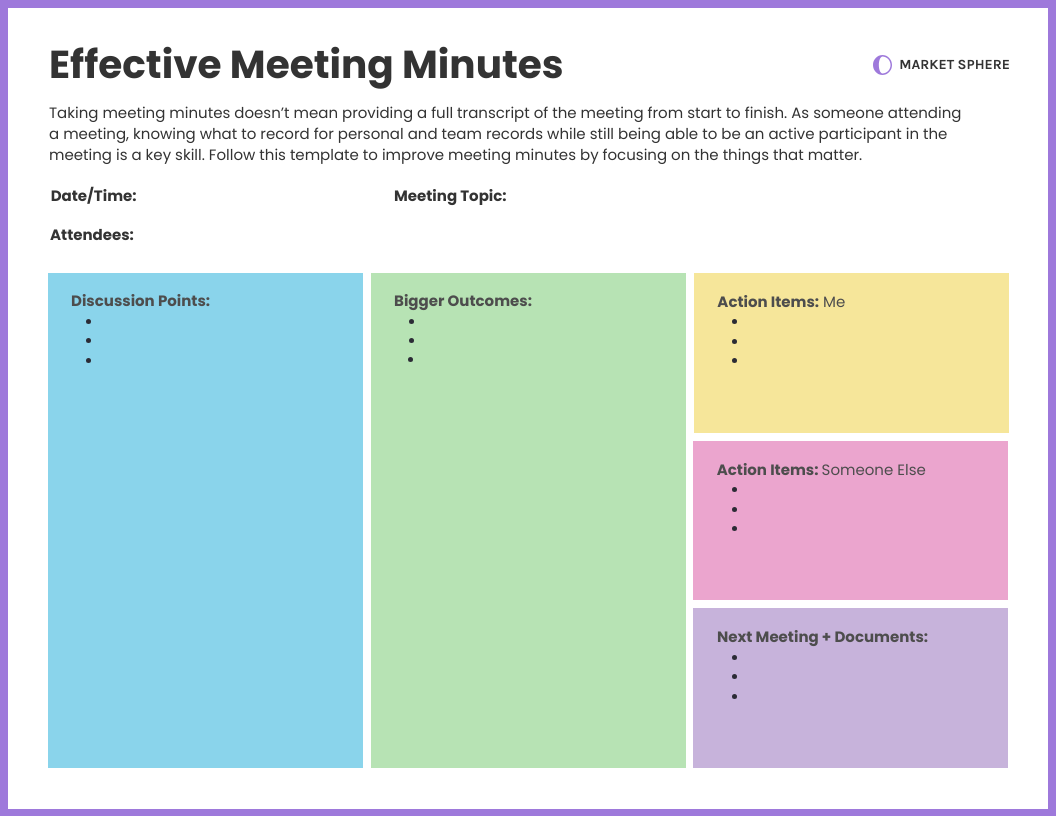
The key takeaways for implementing superior meeting documentation include:
- Structure and consistency create notes that serve as reliable reference documents and accountability tools
- Technology integration amplifies human capabilities without replacing thoughtful analysis and context
- Collaborative approaches distribute workload while improving coverage and engagement across team members
- Follow-through systems transform passive documentation into active productivity drivers that ensure commitments become completed actions
The future of meeting documentation lies in intelligent integration between human insight and technological capability. As AI tools become more sophisticated at understanding context and generating insights, the most successful professionals will be those who combine these capabilities with strategic thinking and clear communication skills. Organizations that invest in robust meeting documentation practices today position themselves for enhanced collaboration, improved decision-making, and stronger competitive advantages in an increasingly complex business environment.
Partner with Quiknote for Success
The strategies and templates discussed throughout this guide—from collaborative note-taking systems to AI-powered transcription integration—require careful implementation and ongoing optimization to deliver maximum impact. Many organizations struggle with the technical setup, team adoption, and workflow integration necessary to transform their meeting documentation practices. Quiknote specializes in helping teams implement comprehensive note-taking systems that combine the best digital tools with proven organizational methodologies.
Our platform addresses the specific challenges covered in this guide by providing structured templates for different meeting types, automated action item tracking, and seamless integration with your existing project management and communication tools. We handle everything from initial system setup and team training to ongoing optimization and advanced feature implementation, ensuring your meeting notes become powerful drivers of team productivity and business success.
Visit https://quiknote.app to discover how our specialized meeting documentation platform can transform your team’s approach to capturing, organizing, and leveraging meeting insights for measurable business results.